Where walking is allowed
Mana Pools National Park
About Mana Pools National Park
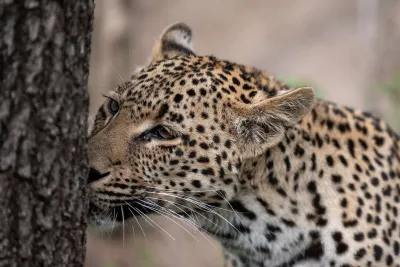
Mana means “four” in Shona, for the four pools the Zambezi left behind when it shifted its course. They still hold water when everything inland has dried, and that is what concentrates the wildlife on the floodplain in the second half of the dry season.
The floodplain itself is the reason photographers talk about this park the way they do. Tall winterthorn trees stand well apart over open ground, so the light comes through in shafts and there is almost no undergrowth. It looks less like bush than like parkland with elephants in it.
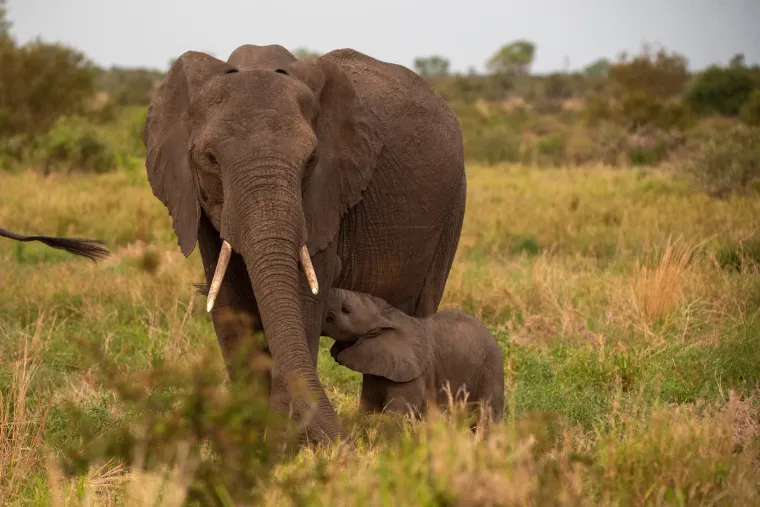
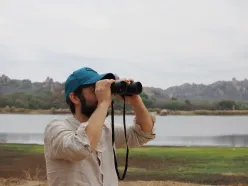
And it is one of the very few national parks in Africa where visitors are permitted to leave the vehicle and walk without a guide. At their own risk, and that phrase is meant literally: there are lion, buffalo and elephant in the same open ground you are walking across.
What the driving is like
- Access is by 4×4, and it is a long way in from the main road. This is not a park you reach by accident.
- It is closed or effectively unreachable during much of the rainy season. The tracks on the floodplain simply do not carry a vehicle when they are wet.
- Camps are unfenced and animals walk through them. That is part of the experience and it is also a set of rules worth taking seriously.
- Fuel, spares and supplies come from outside. Inside, there is nothing to buy.
When to go
The dry months, roughly May to October
The season the park is planned around. As the interior dries, the game moves to the river, and by September and October the concentration on the floodplain is at its highest — and so is the heat.
The rains, roughly November to April
The floodplain becomes impassable, and the park closes to vehicles in large part. Not a matter of preference: for a self-drive trip in these months, this park is not on the list.
What this changes for your planning
01
Walking is a permission, not an offer
Nobody accompanies you and nobody watches over you. Anyone who has never been on foot in big-game country should walk with a guide first, and then decide.
02
The date decides everything here
Of the five parks, this is the one that is genuinely seasonal. It is worth building the route around the window rather than trying to fit the park into a fixed date.
03
The light is the reason to come late in the day
Under the albida trees, low sun and dust make the pictures this park is known for. That is a matter of timing, and timing is a matter of where you sleep.
04
It is remote in the real sense
The nearest help is hours away. This is the park in this list where the vehicle, the equipment and the experience of the driver matter most.
From my own trips
The green season brings fewer people, lower prices and a landscape that looks completely different, but also muddy roads and fewer sightings.
How long to plan
4 nights or more
It is a long way in, and a place that only opens up once you have stopped moving. Two nights here is mostly driving; four is a visit.
Where people stay
01
Nyamepi
The main campsite on the Zambezi, unfenced, with the river in front of it. Elephants walk through. That is not an anecdote, it is the arrangement.
02
The exclusive river sites
A handful of single-party campsites strung along the bank, each on its own. No facilities to speak of, and the reason people plan a year ahead.
03
Chitake Springs
Inland, at the foot of the escarpment, around a spring that keeps running when everything else has stopped. Known for what that concentration attracts, and for walking.
04
Marongora
On the escarpment above the park — where the permits are handled on the way in. Worth knowing about before you are standing there.
For the camera
- The albida trees stand far apart over open ground with almost no undergrowth. Late sun comes through them in shafts, and dust makes the shafts visible. That is the photograph this park is known for, and it happens in the last hour.
- Being allowed on foot changes the angle completely. Low, at eye level, with something between you and it — that is a picture you cannot take from a vehicle.
- It is also the reason to be careful. A photograph is never worth closing the distance to an elephant that has told you not to.
What goes wrong
- Coming at the wrong time of year. This is the one genuinely seasonal park of the five, and in the rains the floodplain simply does not carry a vehicle.
- Walking without ever having walked in big-game country. Go with a guide first, then decide.
- Arriving without being self-sufficient. There is nothing to buy inside, and the nearest help is hours away.
Questions people ask
Can I really walk without a guide?
Yes — it is one of very few parks in Africa where that is permitted, and it is at your own risk in the literal sense. Lion, buffalo and elephant are on the same open ground.
When is it open?
It is a dry-season park, roughly the middle of the year through to the start of the rains. Outside that the floodplain is impassable and much of it closes. Confirm the dates for your year before you plan anything else.
Are there rhino?
No, not any more. They were lost to poaching decades ago. Any description of Mana Pools that leaves that out is not being straight with you.
What vehicle do I need?
A 4×4, and one you can get yourself out of trouble with. The access road down the escarpment and the tracks on the floodplain are not the place to find out what your vehicle cannot do.
How busy is it?
The least busy of the five, by a distance. That is the appeal, and it is also why everything you need has to come in with you.
Borders: Natural Earth