Where it started
Self-drive safaris in South Africa
Parks I have driven myself
Worth knowing
Entry
Driving
Money
Malaria
Best months
As of October 2026. Entry rules change, so check with your own foreign ministry before you travel.
Borders: Natural Earth
What you need for the planning
Kruger National Park
How long
5 to 7 nights
When
May to September, dry winter
Driving
Kgalagadi Transfrontier Park
How long
At least 6 nights
When
March to May and September to October
Driving
What you see here
Where routes go wrong
- A different camp every night. Packing up costs you the precious early morning hours.
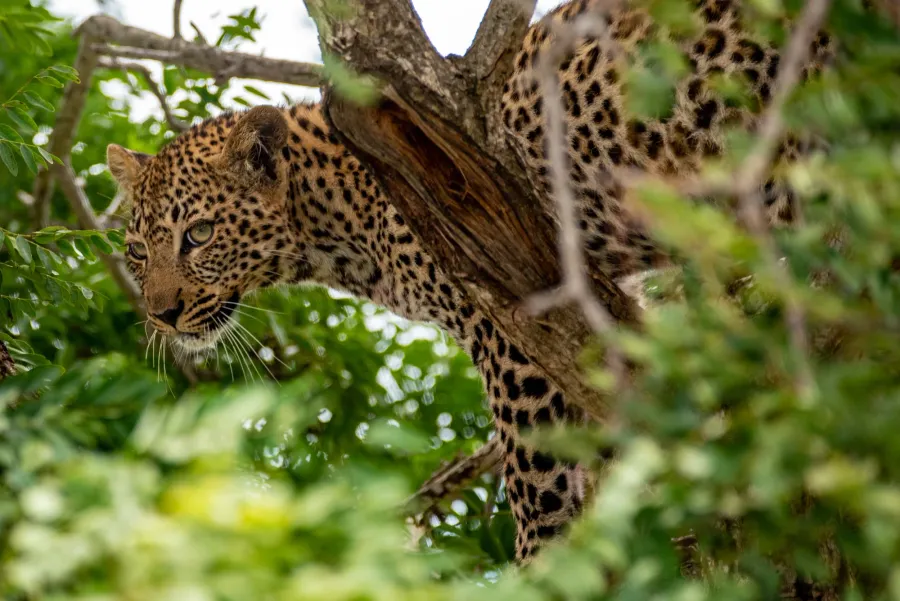
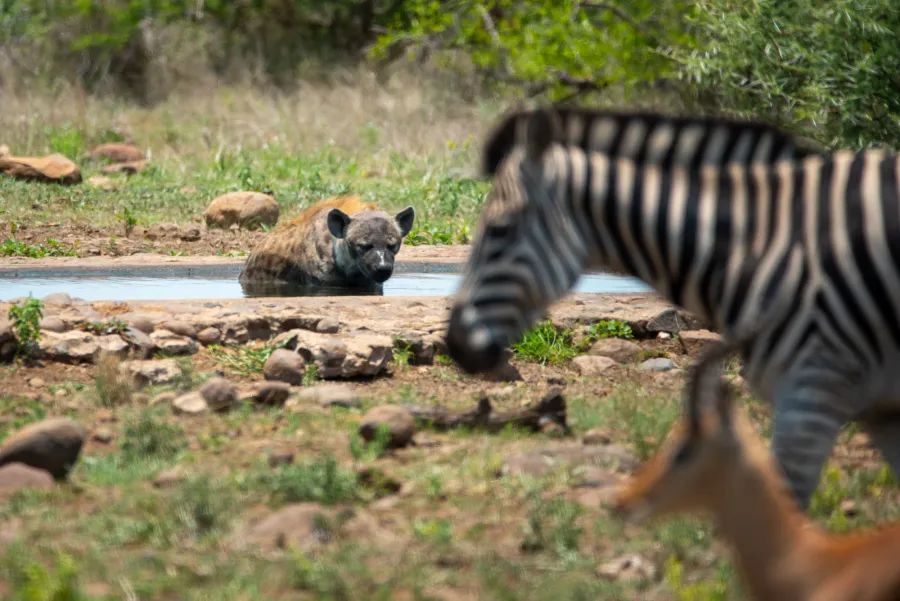
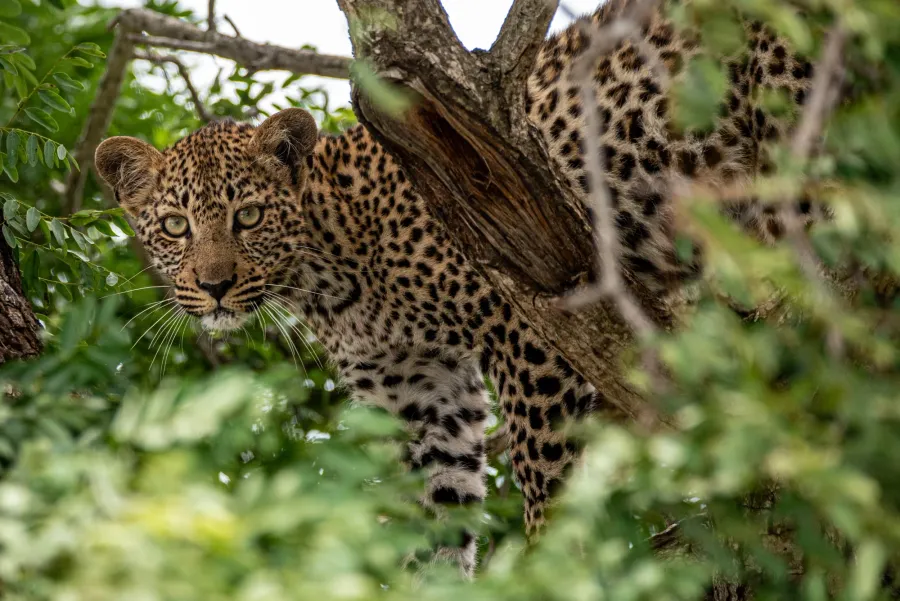
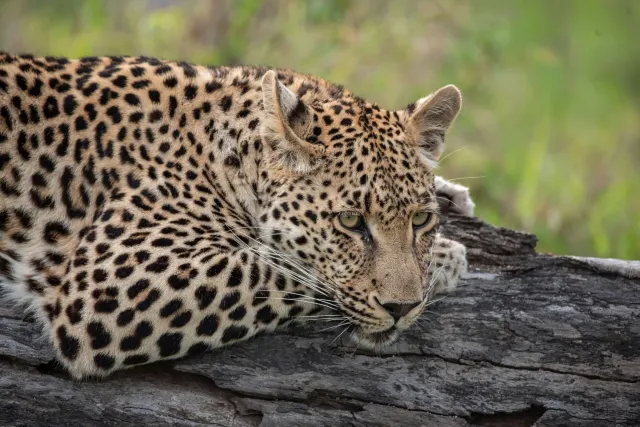
- You cannot plan what happens on a safari, and that is exactly why you should not plan the day by kilometres. A leopard sighting can be so eventful that you easily stand there watching for three hours. Maybe the leopard has a kill in the tree, a hyena sneaks past out of curiosity, or vultures smell the carcass and settle in the next tree. Suddenly the time has flown, and the morning belongs to this one spot. Waiting pays off, because the special moments often happen precisely when you stay. So choose the motto “We spend the morning here” rather than “Today we drive 50 kilometres”. Also have a plan B in case a sighting takes longer: a shorter route back to camp, a stretch you can drop, or a stop that can be moved. That way you can stay put without constantly checking the time.
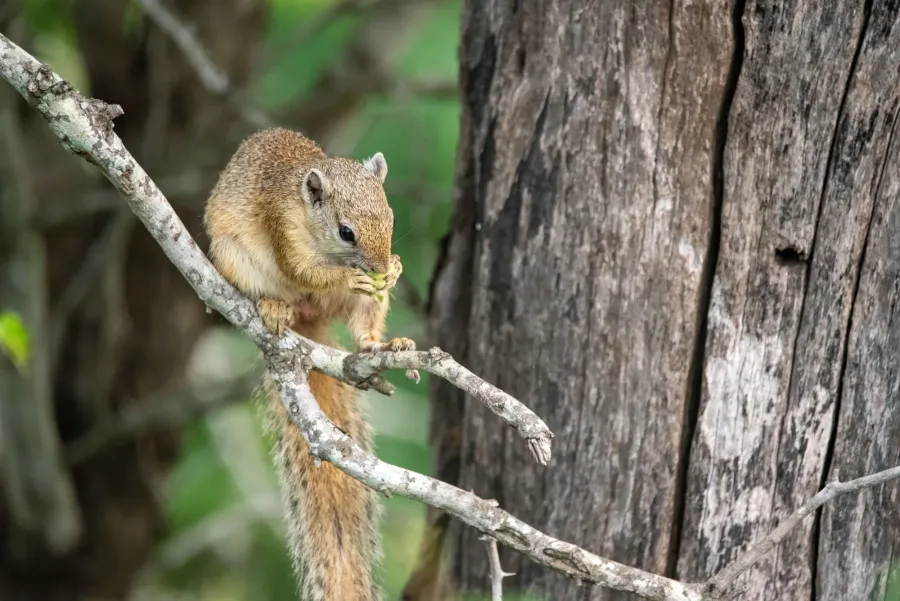
- The small things deserve attention too. If you only look out for lions and elephants, you drive past many special moments. The dung beetle, for example, tirelessly rolls its ball of dung across the road, on and on, to impress the female it has its eye on. Small sightings like these are often the ones you remember longest. So stop now and then and take a closer look.
- Underestimating the tyres. The tracks are mostly gravel and sand, and corrugations and sharp stones are hard on tyres. It is easy to manage, though. Let some air out before you set off: with lower pressure the ride is smoother, the tyres last longer and you get through sand more easily. Add a spare wheel that you check before leaving, and a compressor to pump the tyres back up at the end of the track. Prepared like that, you can enjoy the drives at ease.
- Setting off without enough water and fuel for this leg, the next one and the one after. There is nothing between the camps: no fuel, no shop, no water and hardly any traffic. The distances are long: Twee Rivieren to Mata-Mata takes around two and a half hours, to Nossob a good three, and on sand and gravel the car uses noticeably more than on tar.
Questions about this country
Can I really drive Kruger in a normal hire car? Kruger National Park
Yes, you will get along fine in Kruger with an ordinary hire car, and that is exactly what sets it apart from many other parks. The main roads are tarred, the side roads are gravel, but they are usually in good condition and easy to drive in a normal car. More clearance makes driving more comfortable, and the higher seating position makes it easier to spot animals in tall grass. A 4×4 also opens up a handful of 4×4 trails, which you book through SANParks, but it does not fundamentally change the trip.
Is it safe to self-drive? Kruger National Park
Yes, as long as you stick to the rules, and they are short: stay in the car except at designated places, keep to the speed limits and be in camp before closing time.
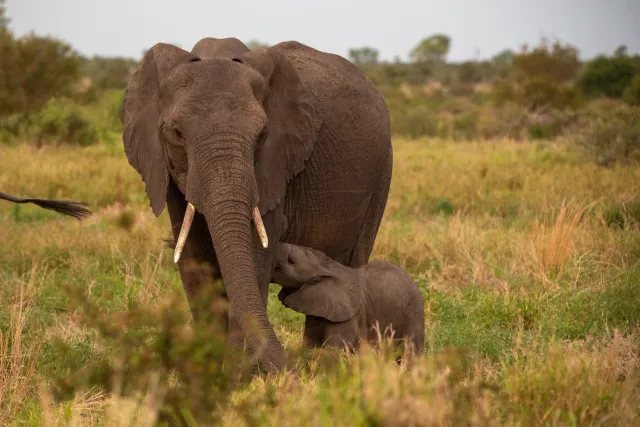
Behind them is a simple idea: you are a guest of the animals. The animal always has right of way. If an animal is on the road or comes towards the car, you make room, let it pass and keep enough distance instead of pushing forward or driving closer. That goes for elephants in particular. They often seem unhurried, but they can run very fast and easily overtake a car. Bulls in musth, a hormone-driven phase, are especially unpredictable and can react aggressively. Watch for warning signs such as spread ears, head shaking or mock charges, and when in doubt, reverse and give the animal space. If you stay patient, you are rewarded with more relaxed sightings, and the animal usually moves on by itself.
Do I have to book camps in advance? Kruger National Park
Yes, the earlier the better. South African school holidays run from 15 December to 15 January, and Kruger is extremely busy then. But even outside that period, the south of the park is now well booked almost all year round because of the many international visitors. The dry winter is in particular demand, because the animals gather at the water and visibility in the thinned-out bush is at its best. In the green summer outside the holidays you have a little more room, but do not count on getting a place in the south at short notice. The earlier you book, the bigger the choice of camps and accommodation.
Will I see the Big Five? Kruger National Park
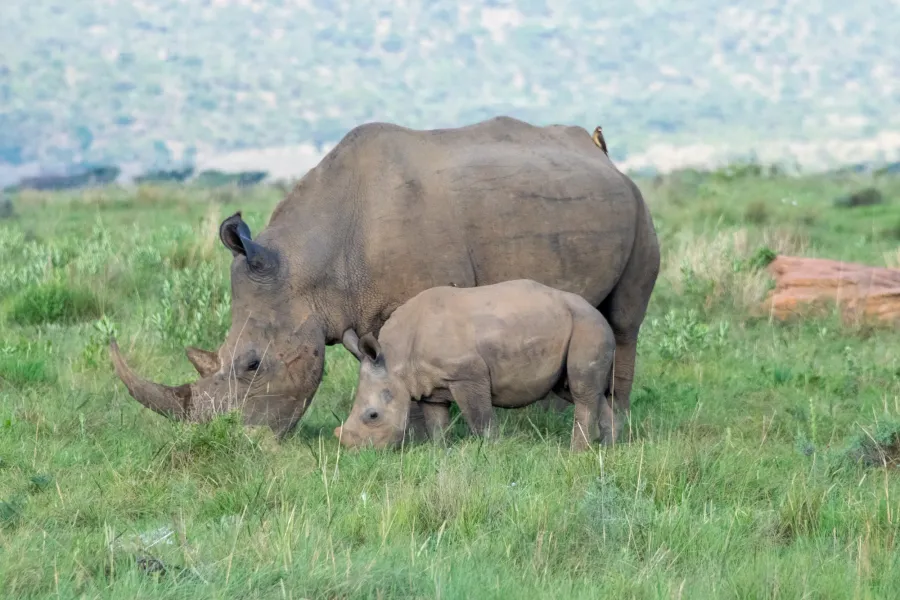
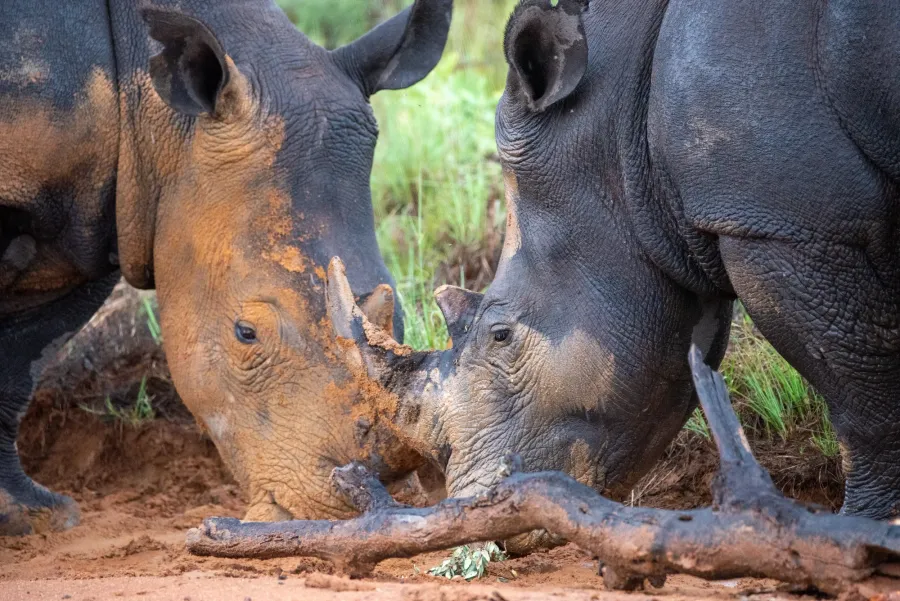
All five live in Kruger, but do not arrive expecting to see them, or you will only end up disappointed. You can push your luck a little, for example by getting up early to see the cats, but nothing is guaranteed, and a bit of luck is always part of it. In my experience the rhino is the hardest to find. Poaching has made them shy: they seem to avoid engine noise and keep as far from the roads as they can. The leopard remains the classic among the hard-to-see animals, but for me the rhino is the real test.
Is malaria a problem? Kruger National Park
Kruger is a malaria area: the risk is low in the dry winter and much higher in the wet summer. If it is your first trip, talk to your doctor before you book, not when you are writing the packing list. Then decide whether to take prophylaxis or just pack emergency tablets. That brings us to the gin and tonic story: the British in the colonies supposedly drank it against fever, because tonic water contains quinine, which was once used against malaria. A nice piece of travel history, but no protection. The amount of quinine in today's tonic is far too small, so in the evening the rule is: gin and tonic for the sundowner, mosquito protection and medication from the doctor.
Do I need a 4×4? Kgalagadi Transfrontier Park
It depends on where you want to go. On the tracks along the riverbeds, between the three large camps, clearance matters more than four-wheel drive. The tracks are usually in good condition, but a higher vehicle gets you through more comfortably, especially after rain. In heavy thunderstorms some stretches can become impassable for an ordinary car.
Away from the riverbeds it is different. The dune routes to remote places, such as the one-way track to Bitterpan or the road to Gharagab, can only be done in a proper 4×4. The same goes for the designated 4×4 trails, which you book in advance through SANParks. There are exceptions here too: according to SANParks, the Kieliekrankie wilderness camp on the southern dune road can be reached in an ordinary vehicle.
For the entire Botswana side, on the other hand, a 4×4 is a must. Deep sand is the rule there, and the routes may only be driven with at least two vehicles.
Are there elephant and rhino? Kgalagadi Transfrontier Park
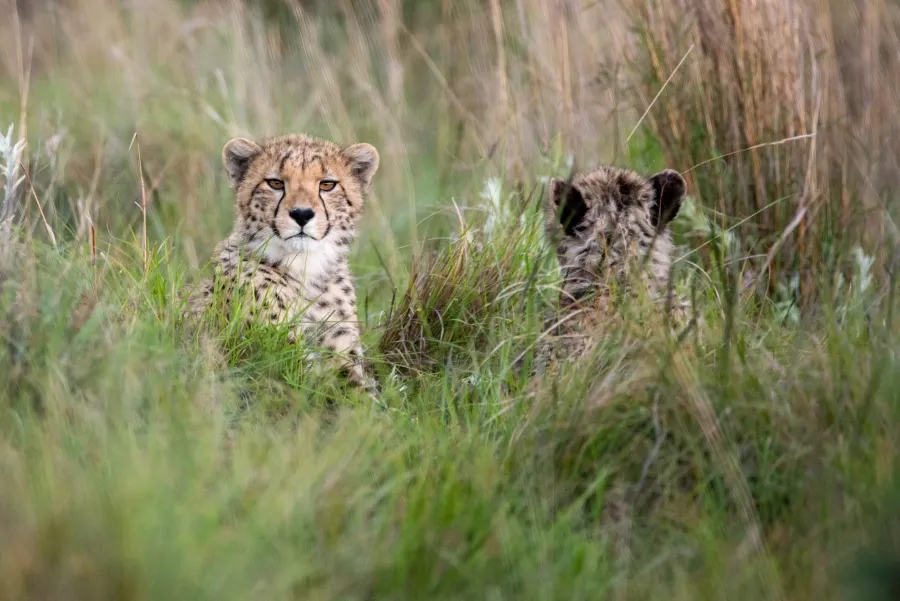
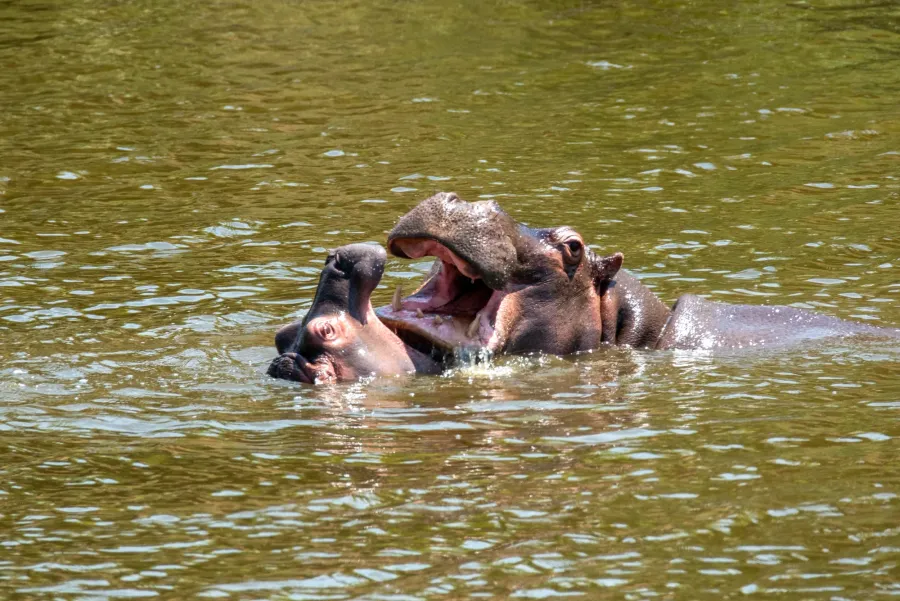
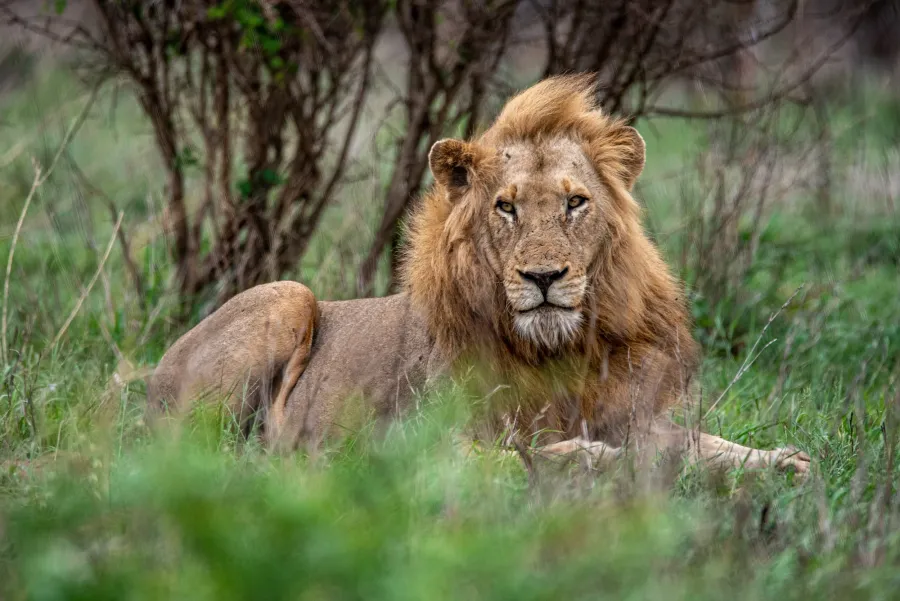
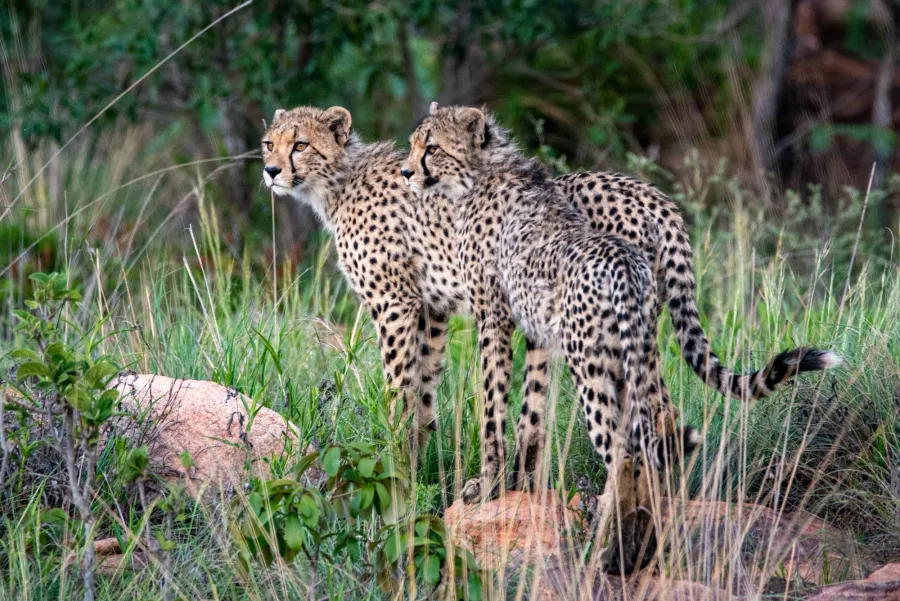
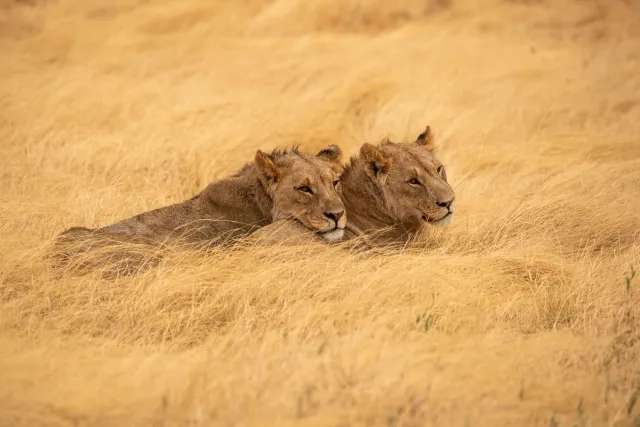
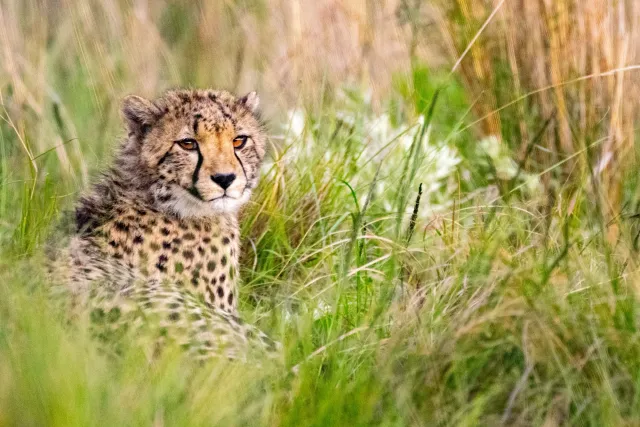
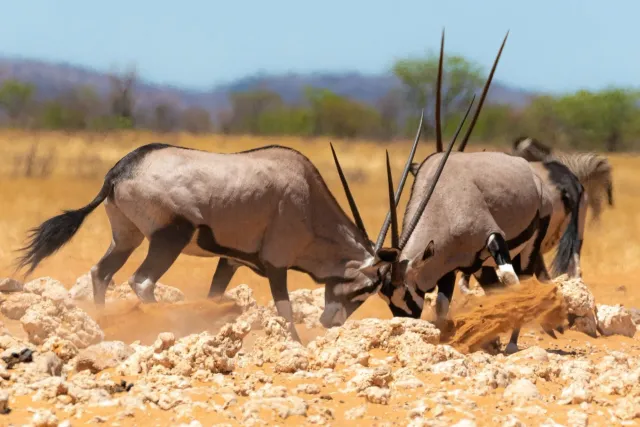
No, and the reason is water. The Kgalagadi is a desert park where the Auob and the Nossob carry water only very rarely and there are hardly any natural waterholes. Hippo and buffalo depend on permanent water and find no habitat here. Elephant and rhino need large amounts of water plus plenty of food, which the sparse Kalahari with its dunes and thin grass cannot provide. Instead, this is home to animals that cope with the dryness: predators in open country, such as black-maned lions, cheetah and leopard, plus gemsbok, bat-eared foxes and meerkats. You will hardly be able to watch many of them this well anywhere else.
How cold does it actually get? Kgalagadi Transfrontier Park
On winter nights from June to August temperatures regularly drop below freezing, on some nights well below. During the day, by contrast, it is sunny and pleasantly warm, often around 25 degrees. Anyone who only thinks of sun and heat sits in the car at sunrise and regrets it. Layering works best: several thin layers you can wear on top of each other in the morning and take off one by one by midday. Pack a warm base layer, a fleece and a windproof jacket, plus a hat and gloves for the early drives. That way you are well prepared at sunrise and not overheating at midday.
Can I cross into Botswana? Kgalagadi Transfrontier Park
Yes, but it is a real border crossing with all the formalities, and the routes have to be planned in advance. In short: you exit and enter at Twee Rivieren, where the South African and the Botswana border post (Two Rivers) share one building, staffed only from 7:30 to 16:00. You need at least two nights in the park, a 4×4 and at least two vehicles for the routes on the Botswana side. The camps there are booked separately from SANParks. All the details are in the section on border crossings. It is worth it, but it is not a spontaneous decision.
Is there mobile coverage? Kgalagadi Transfrontier Park
At Twee Rivieren, mostly. According to SANParks it is the only camp with mobile reception. There is no South African signal at Nossob and Mata-Mata, and you should not count on one on the tracks, in the wilderness camps or on the Botswana side either. That is part of the adventure, but it belongs in the plan: download offline maps, agree on meeting points and times in advance, and tell someone when you will be back in touch. If you want to be on the safe side, you can hire a satellite phone through your car rental company. Do not count on the satellite emergency SOS of newer iPhones, because it is not currently available in South Africa or Botswana.