The waterholes do the work
Etosha National Park
About Etosha National Park
The pan gives Etosha its name and its character: a salt flat so large it is visible from space, holding water only in exceptional wet years, and for the rest of the time a white, shimmering emptiness with almost nothing growing on it. The wildlife lives around its edges.
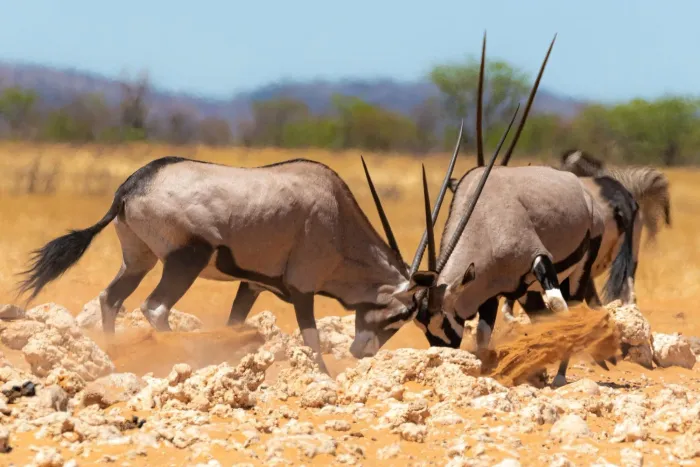
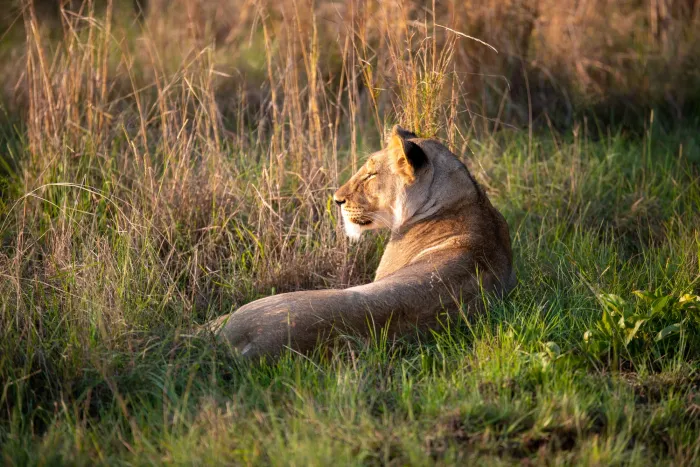
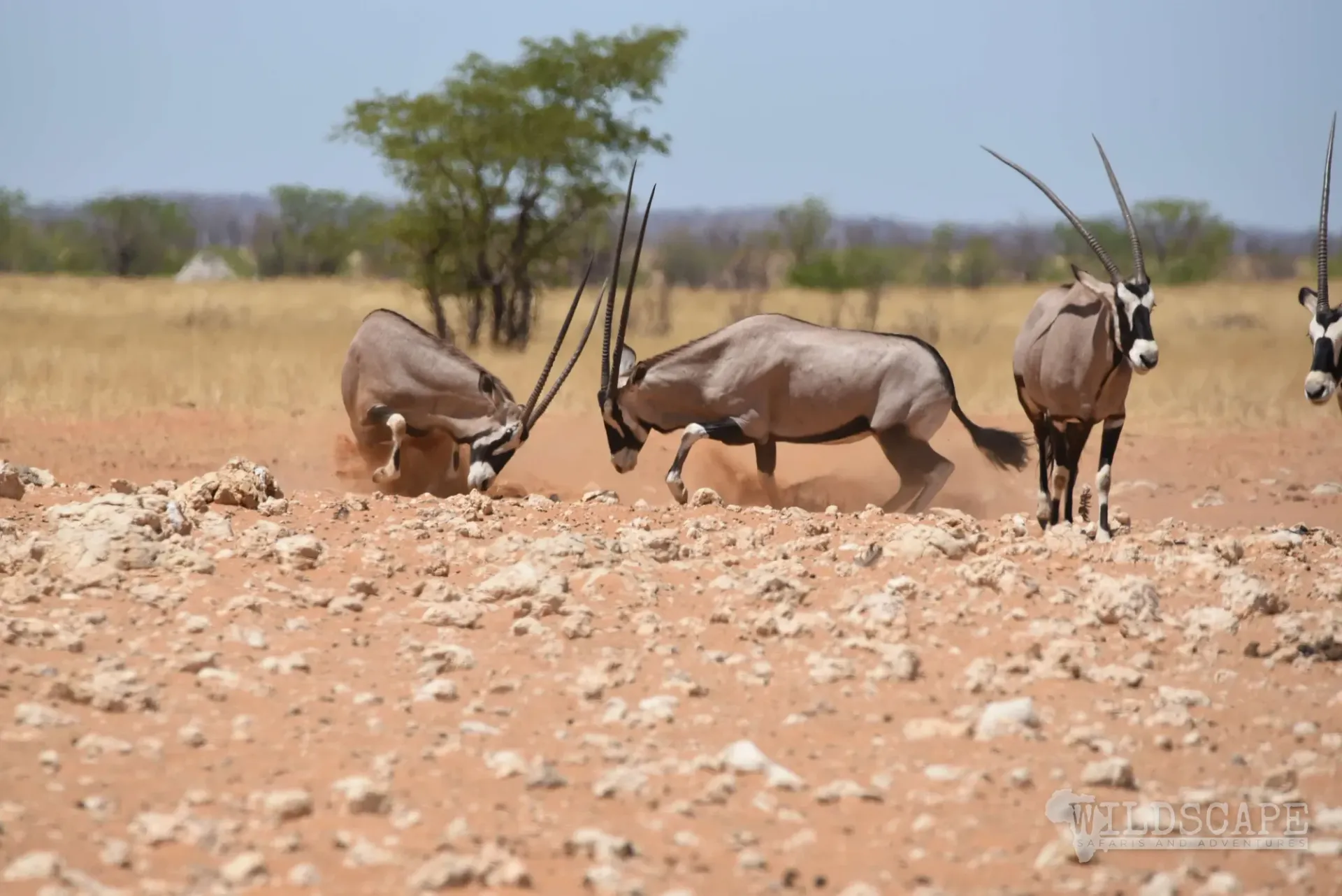
That is the whole logic of the park. There is no permanent river, so the animals are tied to a chain of waterholes, and the roads connect those waterholes. You do not drive around looking. You choose a waterhole, park, switch off the engine and wait, and over an hour or two the day comes to you: zebra first, then oryx and springbok, then elephant, and if you are patient and it is late enough, whatever has been watching all of them.
For a photographer that is a different discipline from a game drive. The light and the position matter more than the kilometres, and the same waterhole is a completely different picture at seven in the morning and at five in the afternoon.
What the driving is like
- The main routes are gravel and calcrete and are graded. An ordinary high-clearance vehicle copes on them; the fine white dust gets into everything regardless.
- Punctures are the classic Etosha problem. Corrugations and sharp calcrete are hard on tyres, and the distances between camps are long enough that a second spare is a sensible thought.
- You may not leave the vehicle outside the camps and the marked points, and the camp gates close at dusk.
- Sleeping inside the park is not a comfort decision here, it is what gives you the waterhole at first light and after dark.
When to go
June to October, dry season
The reason people come. The last surface water is at the waterholes and so is everything else. The bush is bare, the visibility long, and sightings are more predictable here in these months than almost anywhere.
November to April, rainy season
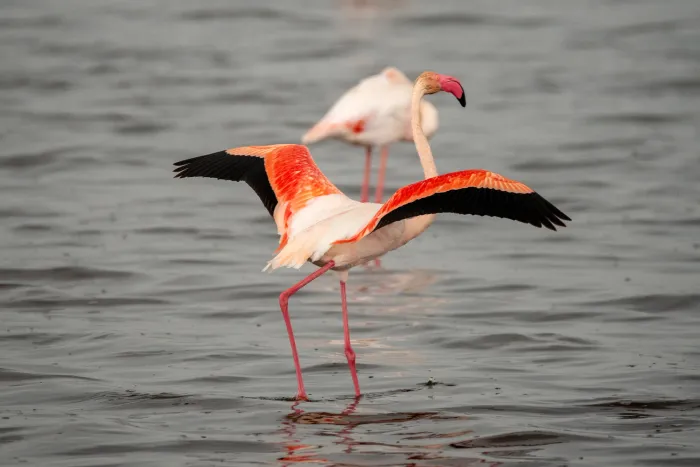
Water lies everywhere, so the animals disperse and the waterholes lose their pull. In exchange the pan can fill, the flamingos and pelicans arrive to breed, the grass is green and the park is quiet. A completely different visit, and not the one to plan a first trip around.
What this changes for your planning
01
A floodlit waterhole is worth planning around
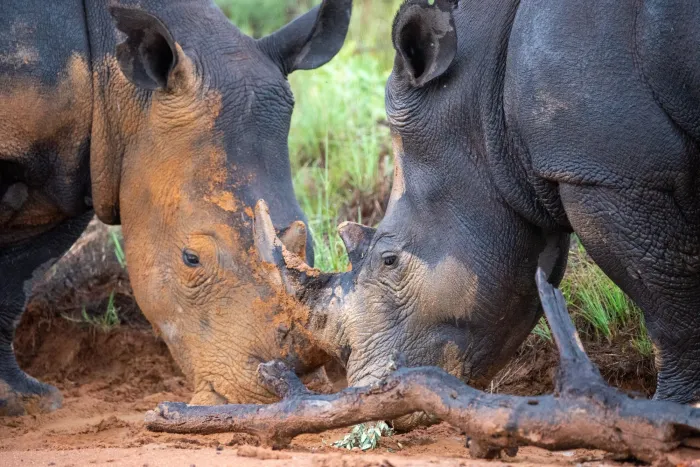
Several camps have a waterhole lit through the night, with a seating area at the fence. Rhino, elephant and lion come in when the park is dark. It costs you nothing but the decision to sleep at the right camp.
02
Waiting beats driving
The instinct is to cover ground. In Etosha that is the wrong instinct: whoever sits still at the water sees more than whoever drives past six of them.
03
Etosha is not Namibia’s only stop
Most routes combine it with the dunes at Sossusvlei and the coast. Those are long driving days on gravel, and how they are ordered decides whether the trip feels calm or rushed.
04
The white dust is not a detail
It coats the car, the gear and the lens. Anyone travelling with a camera plans for it rather than discovering it.
From my own trips
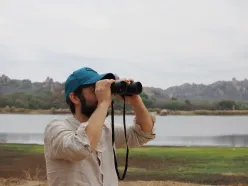
The dry season, roughly June to October, is best for watching wildlife: animals gather at the water sources and the vegetation is thinner.
How long to plan
3 to 4 nights
Long enough to sleep at two different camps and see their waterholes at both ends of the day. Etosha rewards sitting still, and sitting still needs somewhere to sit.
The camps, and what they mean
01
Okaukuejo
The one with the floodlit waterhole, and the reason many people come. Black rhino walk in after dark, sometimes several in a night. Busy, and worth it.
02
Halali
Central, between the two big camps, also with a lit waterhole and considerably quieter. The short walk up to it in the evening is part of the appeal.
03
Namutoni
In the east, built around an old German fort. A different feel from the rest of the park, and the gateway to the eastern waterholes.
04
The western side
Opened to ordinary visitors much later and still far emptier. Different landscape, fewer cars, and a long way from the eastern gate.
For the camera
- You are photographing at a waterhole, which means you choose your position once and live with it for an hour. Arrive early enough to pick the side the light will be on later, not the side that looks good now.
- The pan throws light back up from below. It flattens shadows in a way that flatters animals and fools every camera meter you point at it.
- The dust is fine, white and gets into everything. Change lenses inside the car, or ideally not at all.
What goes wrong
- Driving from waterhole to waterhole. Whoever sits at one sees more than whoever visits six.
- Sleeping outside the park to save money. You then arrive after the best light and leave before it comes back.
- One spare tyre. Calcrete and corrugations are hard on rubber, and the distances between camps are long.
Questions people ask
Do I need a 4×4?
Not for the main network. The graded gravel is manageable in an ordinary high-clearance vehicle. What you do need is decent tyres and a spare you trust.
When is the best time?
June to October, without much argument. The water is only at the waterholes, and so is everything else. The green season is beautiful, quiet and much harder for sightings.
Will I see rhino?
Etosha is one of the best places on the continent for black rhino, and the floodlit waterholes are why. It is still wildlife, but the odds here are unusually good.
Are there hippo or crocodile?
No. There is no permanent river. That surprises people who expect every African park to look the same.
Can I combine it with Sossusvlei?
Most routes do, and they are long gravel driving days apart. Which order you do them in decides whether the trip feels calm or rushed.
Borders: Natural Earth