Built for one thing, and fragile because of it
Cheetah
The cheetah is the outlier. It hunts by day, which is unusual among big cats and is not a preference — it is what is left when you cannot defend a kill. Lions and hyenas take it off them, so they hunt when those are asleep.
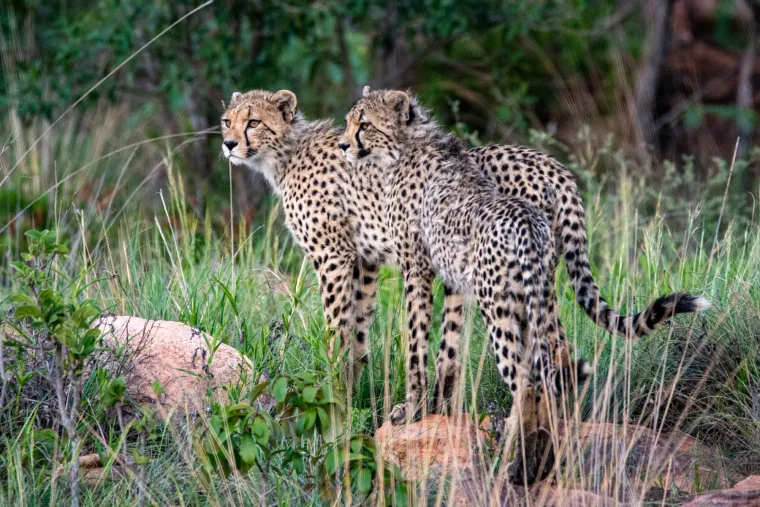
Everything about the animal is a compromise for speed: a small head, a light frame, claws that stay out for grip. That build wins a sprint and loses every fight, which is why a cheetah will abandon a carcass rather than argue about it.
For a visitor that means open country. In the Kgalagadi riverbeds and on the central plains of Kruger you have a real chance of seeing one from a distance and watching it work, which almost never happens with the other cats.
When you actually see them
Where you find them
For the camera
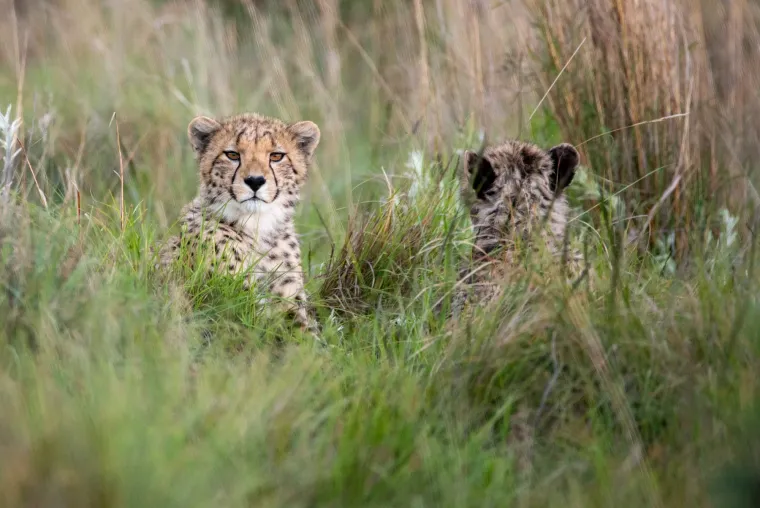
- Look for the mound before you look for the cat. A cheetah on a termite mound at eye level is the picture; a cheetah in grass is a texture.
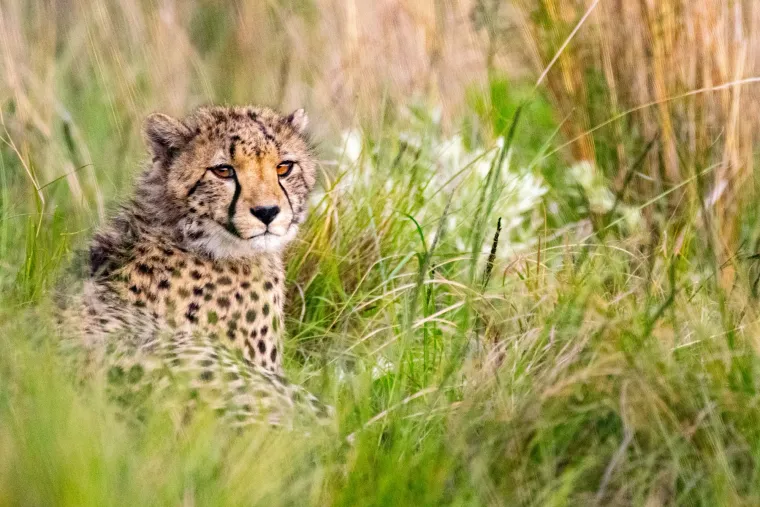
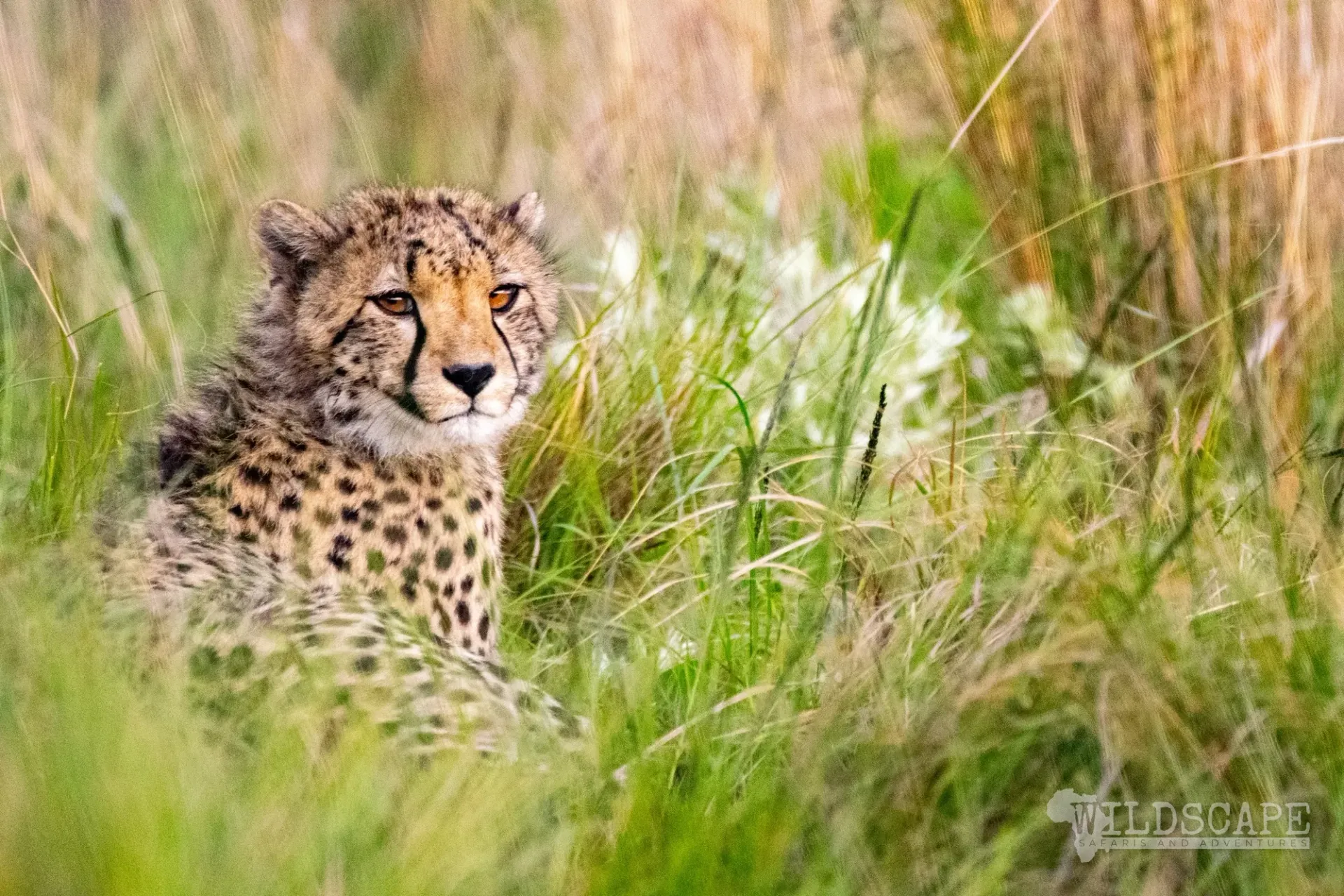
- The tear lines make the face read even at distance. It is one of the few animals where a tight head shot still tells you what it is.
- If it starts walking with purpose, stop shooting and get the car right. You will only get one attempt at the direction it is going.
Questions people ask
Where is my best chance?
The Kgalagadi, on the open riverbeds, and the central grasslands of Kruger. Etosha too, particularly in the dry season around the waterholes.
How do I tell a cheetah from a leopard?
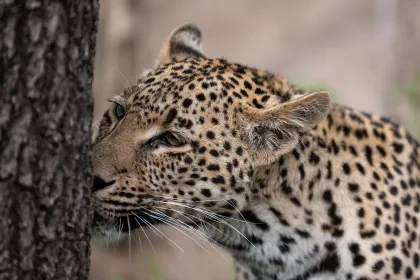
Spots versus rosettes, and the black lines running from eye to mouth — the cheetah has them, the leopard does not. Build settles it too: the cheetah is tall and thin, the leopard heavy and low.